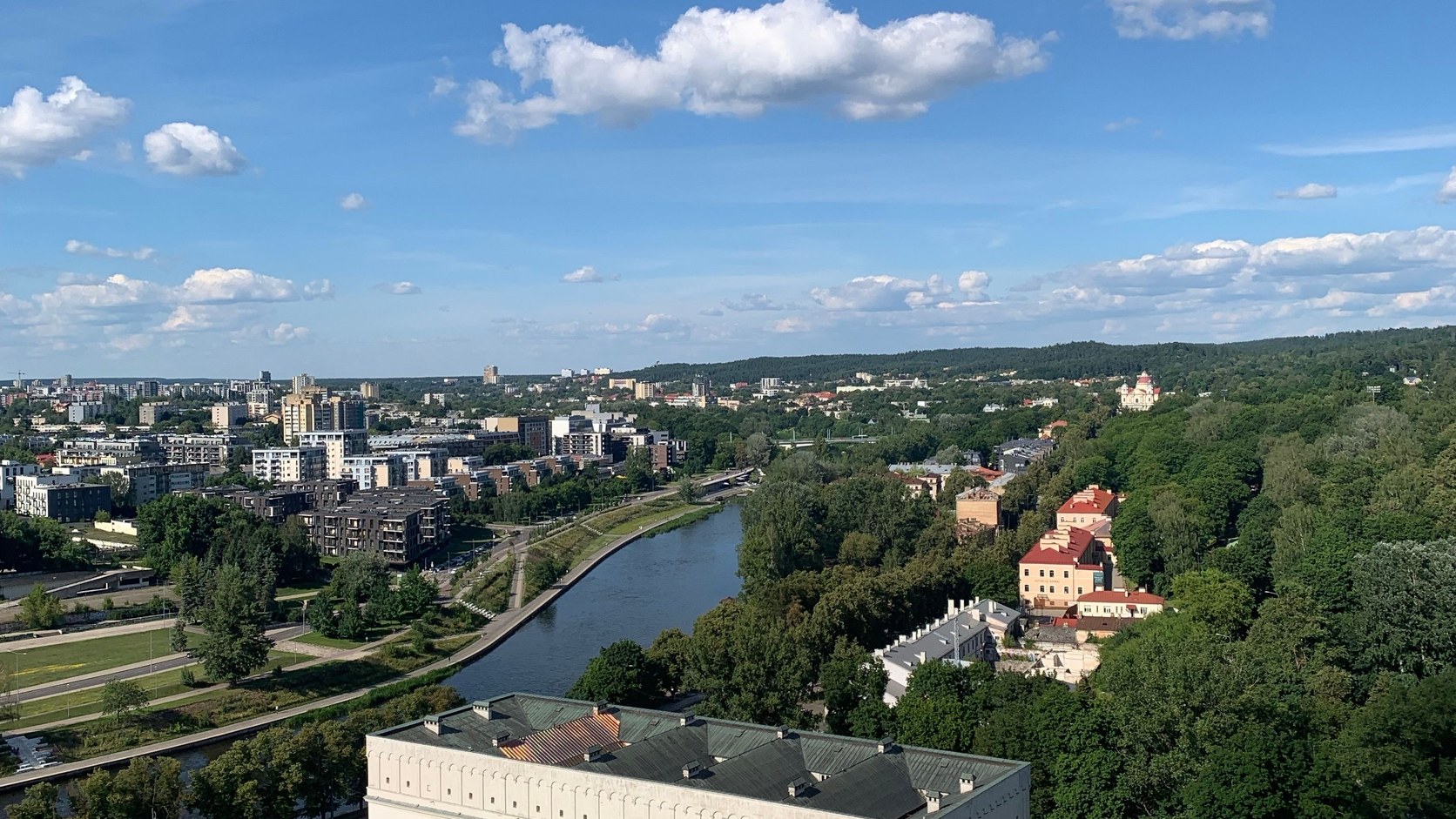
Lithuania is an interesting case precisely because it is not trying to look like a giant. The country is small, exposed, European, digital, and close enough to geopolitical pressure for policy to feel less theoretical than it does in larger, safer markets.
An IMF Article IV consultation is not a magazine article. IMF means the International Monetary Fund, the global institution that monitors economic stability and gives policy advice to member countries. Its Article IV consultation is the fund's regular country health check, named after Article IV of the IMF Articles of Agreement: staff look at growth, inflation, public finances, banks, external risks and policy choices, then discuss the findings with the national authorities.
In Lithuania's latest Article IV material, the economy is still growing: real GDP rose 2.9 percent in 2025 and is projected at 2.8 percent in 2026. That is not a crisis story. The more interesting question is what happens when growth exists, but the sources of growth need to become more durable.
Growth With A Question Mark
Near-term momentum is supported by domestic demand, meaning households and businesses are still spending inside the country; by wage growth, meaning salaries are rising enough to support consumption; by credit, meaning banks are still lending; by fiscal easing, meaning the government is allowing the budget to support the economy; and by EU-funded investment in public projects. But the IMF's warning is clear: if policy stays too dependent on stimulus and one-off support, the country risks trading resilience for comfort.
The pressure points are familiar to many advanced small economies: population aging, skills mismatches, weak productivity growth, imported energy exposure and rising fiscal costs. Public debt is still moderate, but the IMF notes that without action it could climb quickly toward 60 percent of GDP by 2033. That number matters because debt-to-GDP compares what the state owes with the size of the economy that must support it; 60 percent is not a cliff edge, but it is a level where European policy conversations become less forgiving.
That is where the story becomes larger than Lithuania. Small states can move fast, but they have less room to waste policy time. They need institutions, capital depth and infrastructure that turn openness into strength rather than vulnerability.
Capital Markets Are Not A Side Issue
One of the most interesting parts of the IMF assessment is the emphasis on deeper domestic and EU capital markets. Capital markets are the systems that let companies and governments raise money from investors through shares, bonds and other instruments, rather than relying almost entirely on banks. For a country like Lithuania, productivity is not only a labour or technology question. It is also a financing question.
If firms cannot access flexible capital, innovation remains thin. If non-bank financing is shallow, promising companies stay dependent on bank credit or foreign buyers. If Baltic capital markets remain fragmented, scale is harder to build. The policy language may sound technical, but the social effect is visible: fewer ambitious firms, fewer high-quality jobs, less reason for talent to stay.
Energy Security As Competitiveness
Energy is the other structural theme. Lithuania has made progress in renewables, but the IMF still points to reliance on imported energy and the need for investment in renewables, storage, grids, rail electrification and faster EV uptake.
This is not only climate language. It is competitiveness language. A country exposed to energy volatility pays a hidden tax on confidence. Energy security becomes part of the same conversation as finance, skills and innovation: the infrastructure of self-possession.
The AI Layer
The IMF also mentions faster digital adoption and wider AI uptake as ways to lift firm performance. In plain terms, productivity means creating more value from the same hour of work, the same factory, the same port, the same office or the same public service. That matters because AI will not be evenly useful everywhere. Countries with better data, better skills, better energy and better public-sector execution will convert it into productivity faster.
Lithuania's opportunity is not to imitate Silicon Valley theatre. It is to apply AI where small states can be disciplined: public administration, fintech supervision, logistics, energy systems, health, education, export firms and practical productivity tools for companies that do not have massive technology departments.
The Small-State Formula
The luxury world often talks about countries through travel, real estate and events. But the deeper map is capital, infrastructure and institutional quality. These are the things that decide where families invest, where founders stay, where culture receives support, and where a small city can become more than a weekend destination.
Lithuania shows the new small-state formula in unfinished form: fiscal discipline, deeper capital markets, energy independence, skills, AI adoption and European integration. Not glamorous in the obvious sense, but increasingly central to how places acquire weight.