The most useful sentence in the World Bank's 2026 AI argument is not about machines taking over work. It is about sequence. Developing economies do not need to begin by building frontier models or giant data centres. They need to adopt useful tools, adapt them to local conditions, and only later advance toward frontier capability.
That sounds modest. It is not. It reframes AI as infrastructure: power, connectivity, skills, local data and institutions. In other words, the countries that benefit most will not necessarily be the loudest about AI. They will be the ones that can make it work inside clinics, classrooms, farms, tax systems, disaster response and small firms.
The Job Risk Is Different
The World Bank's figures are counterintuitive. In high-income countries, jobs are more than three times as likely to be at risk of automation by generative AI: 14.2 percent, compared with 4.5 percent in low- and middle-income countries.
But the productivity opportunity is much closer. The report says 16.2 percent of jobs in developing economies could see meaningful productivity gains from AI, compared with 18.7 percent in high-income countries. That is the opening. The main prize is not replacing labour. It is amplifying scarce expertise.
Small Tools, Large Effects
A rural doctor with a better diagnostic aid, a teacher with adaptive lesson support, a farmer with better crop advice, a local business with forecasting tools, a tax office with cleaner detection systems: none of these require glamour. They require reliable electricity, dependable internet, usable data and institutional trust.
This is why the World Bank's warning matters. Without those basics, AI could widen inequality between countries and inside them. It could concentrate market power, weaken trust in public institutions, or embed bias into decisions that already affect vulnerable people.
The New Development Luxury
For Victory Of, the phrase 'development luxury' is not about charity aesthetics. It is about the assets that make a country legible to talent and capital: power, schools, clinics, connectivity, administrative competence, investor confidence and a believable future.
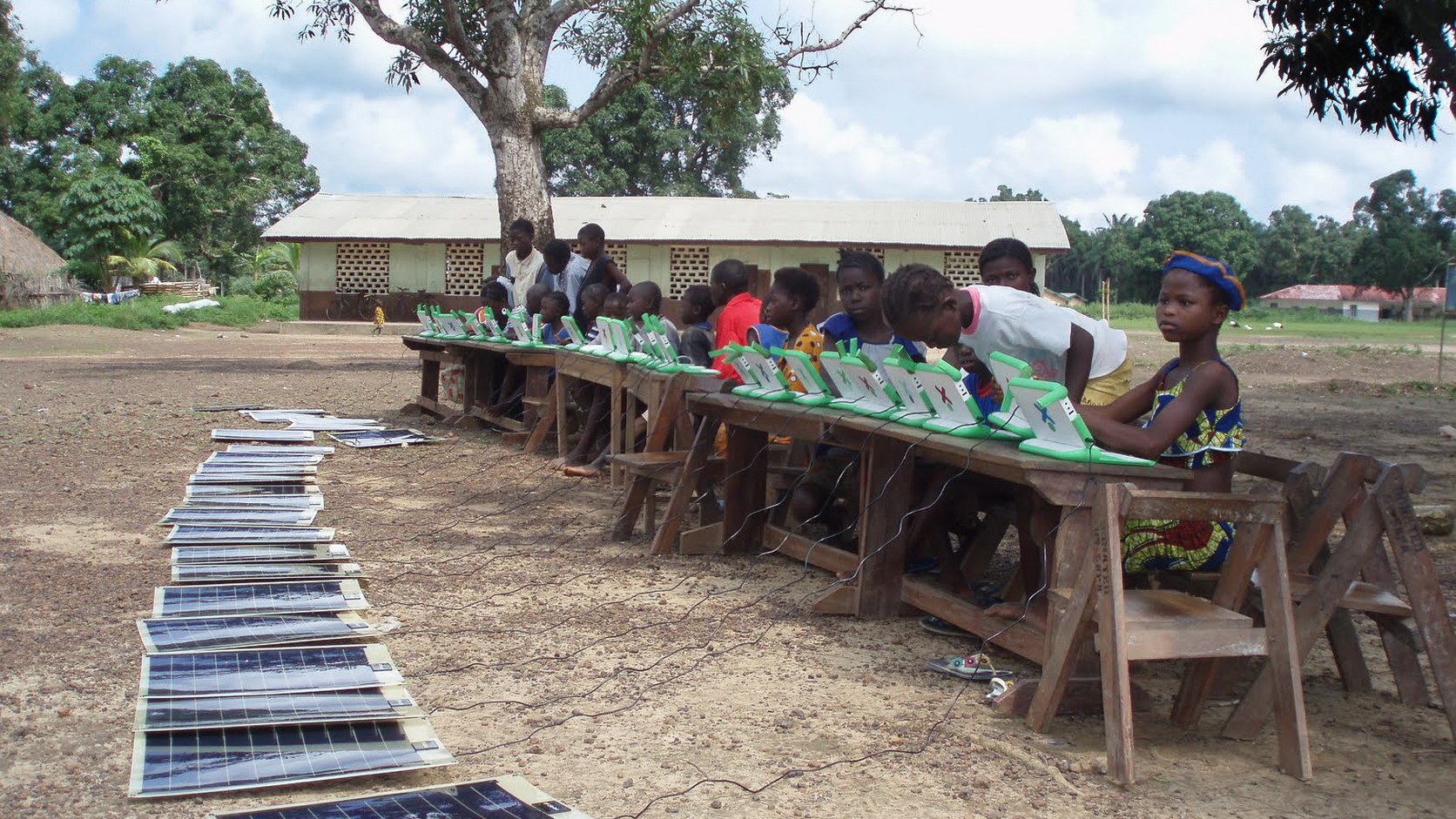
That is also why the World Bank connects AI to energy access. In Sub-Saharan Africa, the report notes that nearly one-third of rural schools still lack reliable electricity, and more than two-thirds lack dependable internet access. The AI story begins before the laptop is opened.
Why This Belongs In A Magazine About Taste And Capital
Taste is not only the ability to choose a hotel, a jacket or a painting. At a higher level, taste is the ability to recognise which forms of progress are real. AI will produce an enormous amount of spectacle. The more interesting question is where it becomes quiet capacity.
The next decade may make certain places newly investable, newly governable or newly culturally visible. The signal will not always be a skyscraper or a unicorn company. Sometimes it will be a clinic that works, a school that connects, a public service that stops wasting time, or a small firm that can finally operate with the tools of a much larger one.