
Singapore sells a rare urban proposition. Capital moves easily, infrastructure works, streets feel orderly, schools and hospitals inspire confidence, and a dense tropical city remains remarkably liveable. These qualities support its position as a financial centre, a family-office base, a luxury stopover and a place where global companies are willing to locate senior people.
Environmental quality belongs inside that proposition. Clean air, manageable heat and confidence in water and infrastructure shape the daily experience for which residents, employers and visitors pay a premium. When these conditions weaken, the effect reaches beyond public health. It enters hotel rates, working hours, energy demand, insurance calculations and the long-term attractiveness of property.
By the morning of 15 September 2026, the haze had become an islandwide health concern. At 06:00 Singapore time, all five regions recorded a 24-hour Pollutant Standards Index (PSI) in the Unhealthy band, the first simultaneous occurrence since September 2019, according to CNA. The readings were 104 in the north, 111 in the south, 128 in both the east and west, and 154 in the centre. The official Unhealthy category covers PSI readings from 101 to 200.
Conditions shifted during the day. At 13:00, the north and south had returned to Moderate, at 95 and 99, while the centre, west and east remained Unhealthy at 139, 119 and 117. These are dated observations of a changing episode. The previous day's official advisory described smoke from Kalimantan arriving on east-southeasterly winds, with additional haze from southern Sumatra, and forecast High Moderate to Mid Unhealthy conditions. For immediate outdoor activity, the authorities direct people to one-hour PM2.5 readings; the 24-hour PSI forecast supports planning for the following day.
The worsening episode exposes a regional vulnerability within an exceptionally governed city. Singapore's control over vehicles, factories and buildings coexists with exposure to fires hundreds of kilometres beyond its borders. The economic question is how the duration and recurrence of such disruption affect the costs of living, working and owning assets here.
A premium that can be measured
The sharpest evidence comes from Singapore's earlier haze episodes. A peer-reviewed estimate placed the total cost of the two-month 2015 episode at S$1.83 billion, equivalent to 0.45 per cent of GDP. Tangible losses included healthcare, lower tourism receipts, reduced business activity, weaker productivity and spending on mitigation. The study also counted the less visible loss of wellbeing.
Research using daily hotel data found a direct response in the hospitality market. As pollution intensified, foreign visitors cancelled or avoided trips and average room rates declined. A doubling of pollution levels was associated with falls of roughly 1.5 to 2 per cent in average hotel rates, producing losses estimated at more than S$200,000 per day for the sector during the period studied.
This matters for the economics of prestige. Singapore's leading hotels, restaurants, retailers, cultural institutions and event venues benefit from a citywide promise of frictionless comfort. Haze interrupts that promise even when buildings remain open. A skyline disappears, outdoor tables empty, children stay inside, training schedules change and a weekend by the pool becomes an indoor itinerary. The physical city survives; the experience commanding the premium becomes thinner.
| Environmental pressure | Current or historical signal | Where value is exposed |
|---|---|---|
| Transboundary haze | 15 September 2026: all five regions Unhealthy at 06:00, PSI 104–154; three remained Unhealthy at 13:00 | Tourism, hotels, events, outdoor leisure, health and reputation |
| Particles and ozone | MSE reports achievement of several 2020 targets; PM10 and ozone remain concerns. Those historical targets do not describe today's air | Long-term health, workplace quality and the credibility of a clean-city promise |
| Extreme heat | Heat-related productivity losses have been projected at S$2.22 billion annually by 2035 | Services, construction, manufacturing, public realm and energy demand |
| Sea-level rise | Mean sea level could rise by up to 1.15 metres by 2100; compound coastal levels could reach five metres during extreme events | Coastal infrastructure, prime real estate, insurance and public expenditure |
| Water security | More than 500,000 water-quality tests each year; recycled NEWater is monitored across about 300 parameters | A major source of present resilience |
The 2015 cost and hotel estimates above describe a historical episode. The heat and sea-level figures are projections with different horizons and assumptions. They cannot be added together to calculate the cost of September 2026; a comparable loss estimate for the current episode has not been established in the sources reviewed here.
Wealth, property and the cost of staying
The Global Wealth Report 2026 from UBS estimates that Singapore had 244,000 US-dollar millionaires in 2025. Average wealth per adult was US$527,217, against median wealth of US$96,434. These are estimates of personal net worth, including financial and non-financial assets after debt, rather than a count of private-bank clients or family offices. The distance between mean and median also matters: the population's capacity to absorb higher housing, cooling or health-related costs is uneven.
This concentration of wealth helps explain the commercial stakes. A household may hold investments internationally while depending on one city's homes, schools, transport and healthcare. The quality of that local environment becomes part of the practical value of its base. The bank's report provides the wealth context; it offers no evidence that the present haze has triggered capital flight. Establishing that would require separate data on migration, assets under management and property demand.
For an international comparison, a 2024 study by Singapore's sovereign wealth fund GIC and S&P Global Sustainable1 examines properties around the world held by companies in the S&P Global REIT Index. Its geographical scope is this specific international portfolio. Its estimate of cumulative physical-risk costs through 2050 reaches the equivalent of about 28 per cent of the index constituents' July 2024 real-estate asset value. The costs accumulate over decades, and the authors caution against interpreting them directly as valuation losses. Applying the percentage to Singapore would require a separate assessment of local properties and their exposure; the study supplies no Singapore-specific estimate of haze damage.
In simpler terms, imagine this international property portfolio was worth $100 in July 2024. Under the study's medium-high warming scenario, climate-related losses and expenses accumulated through 2050 could total about $28, measured in the prices of the years when they occur. The figure describes a bill building up over decades across the properties studied worldwide. The portfolio's eventual sale value is a separate question.
The report also examines how floodproofing and measures to reduce heat exposure can alter those costs. For a Singapore property owner, that makes resilience a due-diligence question: what is the building's exposure, what protection already exists, who funds upgrades, and how much operating income could be interrupted? Cooling efficiency, filtration, maintenance obligations and insurance terms deserve scrutiny alongside location and rental yield. These are practical implications of the risk framework, not evidence of a current market-wide discount.
What history says about cities and ecological decline
Cities seldom lose their rank for one environmental reason. Trade routes shift, political power moves, industries age and wars intervene. Ecology becomes decisive when it weakens the systems that made a city valuable and raises the cost of staying until people, firms and capital acquire credible alternatives.
Angkor offers a long historical perspective. The Khmer capital in present-day Cambodia flourished between the ninth and fifteenth centuries. Greater Angkor was an extensive settlement region, containing the temple of Angkor Wat among more than a thousand temples. A population reconstruction published in Science Advances in 2021 estimates 700,000 to 900,000 inhabitants at its thirteenth-century peak. Reservoirs, canals and embankments supported this dispersed urban landscape.
The chronology of its contraction is more complex than a single catastrophe. Research published in PNAS identifies two major drought intervals, 1345–1374 and 1401–1425, interspersed with damaging monsoon conditions that strained the water network. The conventional endpoint of 1431 sits within a much longer transformation: archaeological evidence places important changes as early as the late thirteenth century. Climate stress compounded political and economic shifts already under way. The population estimate describes Angkor's peak; the evidence does not provide a reliable count of people who subsequently left because of drought. Treating all 700,000 to 900,000 residents as climate migrants would erase that distinction.
Industrial Britain supplies a different kind of number. W. Walker Hanlon's study, published in The Economic Journal in 2020, follows 31 cities over the census decades from 1851 to 1911. Its counterfactual reduces the growth of local industrial coal use by 10 per cent in each period. Under those assumptions, the cities' combined population in 1911 would have been about 1.5 million larger. This is an estimate of foregone urban growth, rather than a historical register of 1.5 million departures. Smoke affected the attractiveness and productive capacity of cities that were often still expanding. The distinction matters for Singapore: environmental damage can lower a city's potential even while population and investment continue to grow.
The labour-market mechanism has contemporary evidence. A 2026 study in the Journal of World Business combined expatriate interviews with data on Japanese multinationals' subsidiaries in Chinese cities. Interviewees described pollution as a stressor that weakened commitment to assignments; the quantitative analysis found lower expatriate deployment where local air pollution was greater. Applying that mechanism to Singapore is an analytical comparison, with no equivalent Singapore effect estimated here.
These histories illuminate how environmental pressures enter the everyday economics of a city through housing choices, employment and the cost of maintaining infrastructure. Singapore's institutions and international networks give it considerable resilience; recurring disruption can still raise employers' costs, restrict outdoor activity and influence households choosing a regional base.
The geography Singapore cannot fully govern
.jpg?width=1800)
Local pollution is addressed through land-use planning, industrial controls and vehicle standards. Singapore's Ministry of Sustainability and the Environment describes vehicles, power stations and industry as the principal domestic sources. Its Clean Air page reports achievement of the 2020 targets for nitrogen dioxide, carbon monoxide, sulphur dioxide and PM2.5, while PM10 and ozone remain challenges. Meeting those historical targets offers no assurance about air quality during a particular haze episode.
Haze introduces a different political problem. Forest and peat fires in Indonesia, often connected to land clearance, release fine particles that prevailing winds carry across national borders during dry periods. Singapore's Transboundary Haze Pollution Act 2014 extends liability to conduct abroad that causes or contributes to haze pollution in Singapore.
The law gives the authorities several concrete tools. Preventive notices can require companies to stop burning, deploy firefighters and submit plans to extinguish fires and prevent recurrence. Investigators can demand relevant documents and information. On conviction under section 5, a company can face fines of up to S$100,000 for each day or part-day of haze pollution, with up to S$50,000 extra per day for failure to comply with a preventive notice, subject to the section's S$2 million aggregate ceiling. Section 6 separately allows civil claims for qualifying losses caused by the haze.
These powers require evidence linking the company to the pollution and applicable legal procedures. Establishing responsibility across borders and securing overseas evidence can complicate enforcement. The penalties described here are statutory powers; a specific case requires its own findings and outcome.
Singapore's investment in sensors, warnings, filtered interiors and emergency planning reduces exposure within the city. Preventing the smoke at its source also depends on regional cooperation over fires and land management.
For international residents, this distinction offers little comfort during a bad week. A family deciding where to live, a company relocating executives or a traveller choosing an Asian stopover responds to lived conditions. The source of the smoke matters for policy; the view from a hotel room matters for demand.
Heat is the slower pollution story
Haze is visible and episodic. Heat creates a longer-running exposure. Singapore has designated 2026 as its Year of Climate Adaptation. Its Third National Climate Change Study examines outcomes through 2100; the government's adaptation summary cites potential increases of up to 5.3 degrees Celsius in daily maximum temperatures. This is an upper-end long-term projection, with outcomes dependent on emissions, rather than a forecast for the next few summers.
A National University of Singapore study cited by the Ministry of Manpower projected heat-related productivity losses of S$2.22 billion a year by 2035. Services carried the largest estimated loss among the sectors studied, ahead of manufacturing, construction and agriculture. That finding widens the usual image of heat risk. The exposure belongs to logistics workers and building crews, and it also reaches hospitality, transport, maintenance, events and every business that depends on comfortable movement through the city.
Tropical luxury has traditionally been engineered through air conditioning, shaded arrivals, pools and lush planting. Rising heat raises the cost of maintaining this atmosphere. Cooling demand grows, outdoor public life contracts and the transition between a sealed interior and the street becomes harsher. The city can remain efficient while becoming less pleasurable.
That difference carries economic weight. Senior talent and mobile wealth compare Singapore with other highly functional jurisdictions. Their calculations include tax, regulation and schools, together with air, climate and the quality of ordinary weekends. Environmental discomfort rarely appears as one decisive line in a relocation model. It accumulates inside retention, travel behaviour and willingness to pay.
Dubai and the limits of the luxury interior
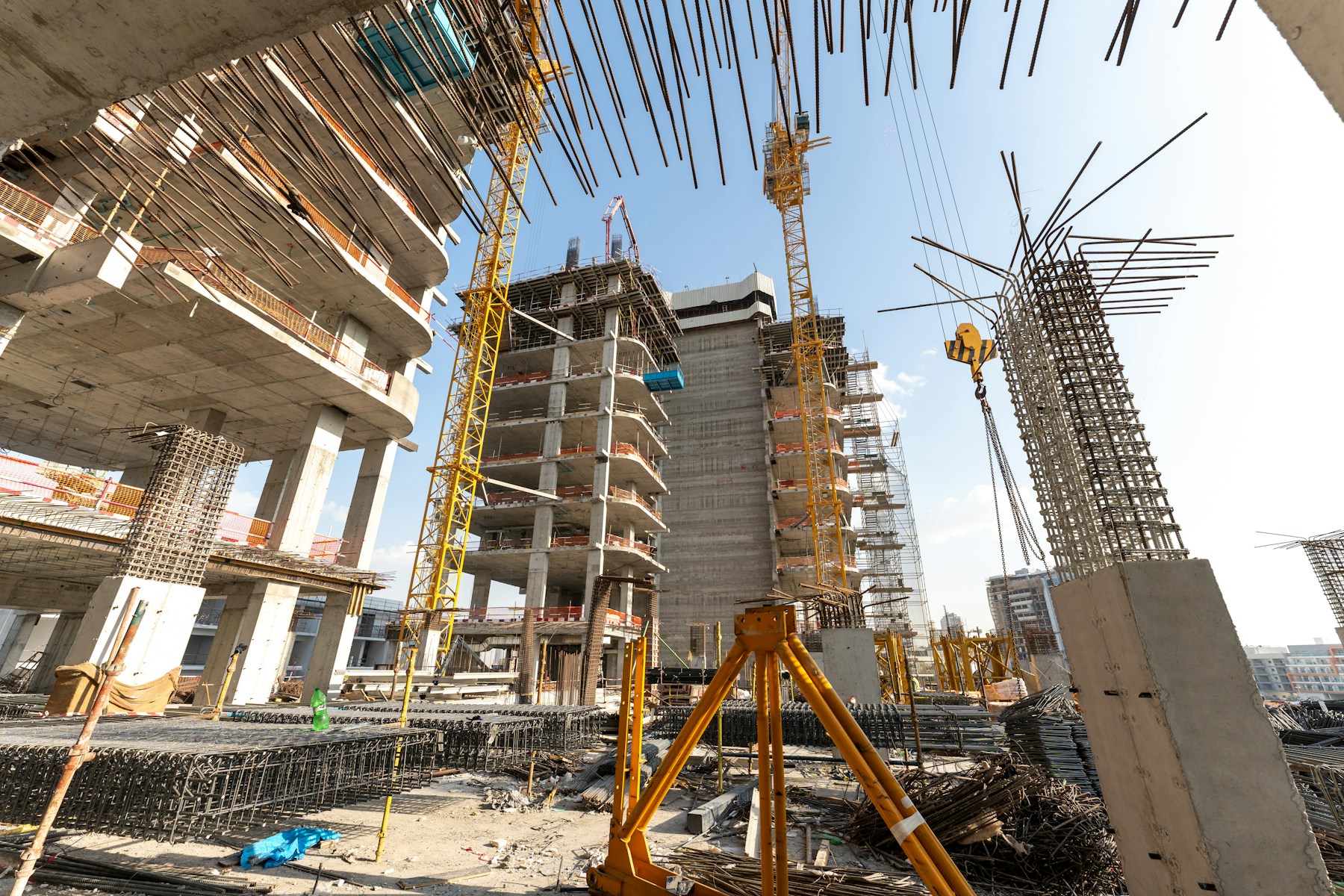
Dubai provides a revealing comparison because it has perfected the controlled interior. Hotels, malls, private clubs and residences deliver an extraordinary standard of temperature, service and visual finish. Outside them, natural desert dust combines with traffic, industry and constant construction. Official air-quality reporting in the Emirates identifies regional dust clouds and construction activity among the sources of particulate matter.
The result can feel more consequential than an air-quality number suggests. In winter, when the climate should invite outdoor life, a visitor may encounter a pale sky, dust on terraces, noise and the residue of nearby building sites. The contrast with immaculate lobbies and expensive landscaping sharpens the disappointment. Luxury promises command over the environment, so evidence of an uncontrolled exterior becomes especially conspicuous.
For Singapore, the comparison brings the quality of outdoor life into view. Waterfront walks, gardens, terraces and comfortable journeys between buildings contribute to the experience residents and visitors pay for. Their appeal depends on conditions across the city, extending well beyond the cooling and filtration of individual properties.
Water shows the stronger side of the model
Singapore's water system prevents the argument from becoming a simple story of ecological decline. PUB, the national water agency, conducts more than 500,000 tests each year across reservoirs, treatment facilities and distribution networks. Tap water meets Singapore's 2025 drinking-water regulations and World Health Organization guidelines. NEWater, the country's highly treated recycled supply, is monitored across roughly 300 parameters.
This is environmental infrastructure functioning as a national asset. Water scarcity produced engineering capability, institutional confidence and a system that supports growth despite limited natural resources. The contrast with haze is instructive. Pollution contained within a governable system can be monitored, treated and turned into resilience. Regional smoke and global warming require cooperation beyond the city-state's formidable administrative reach.
Coastal protection and the balance sheet of permanence
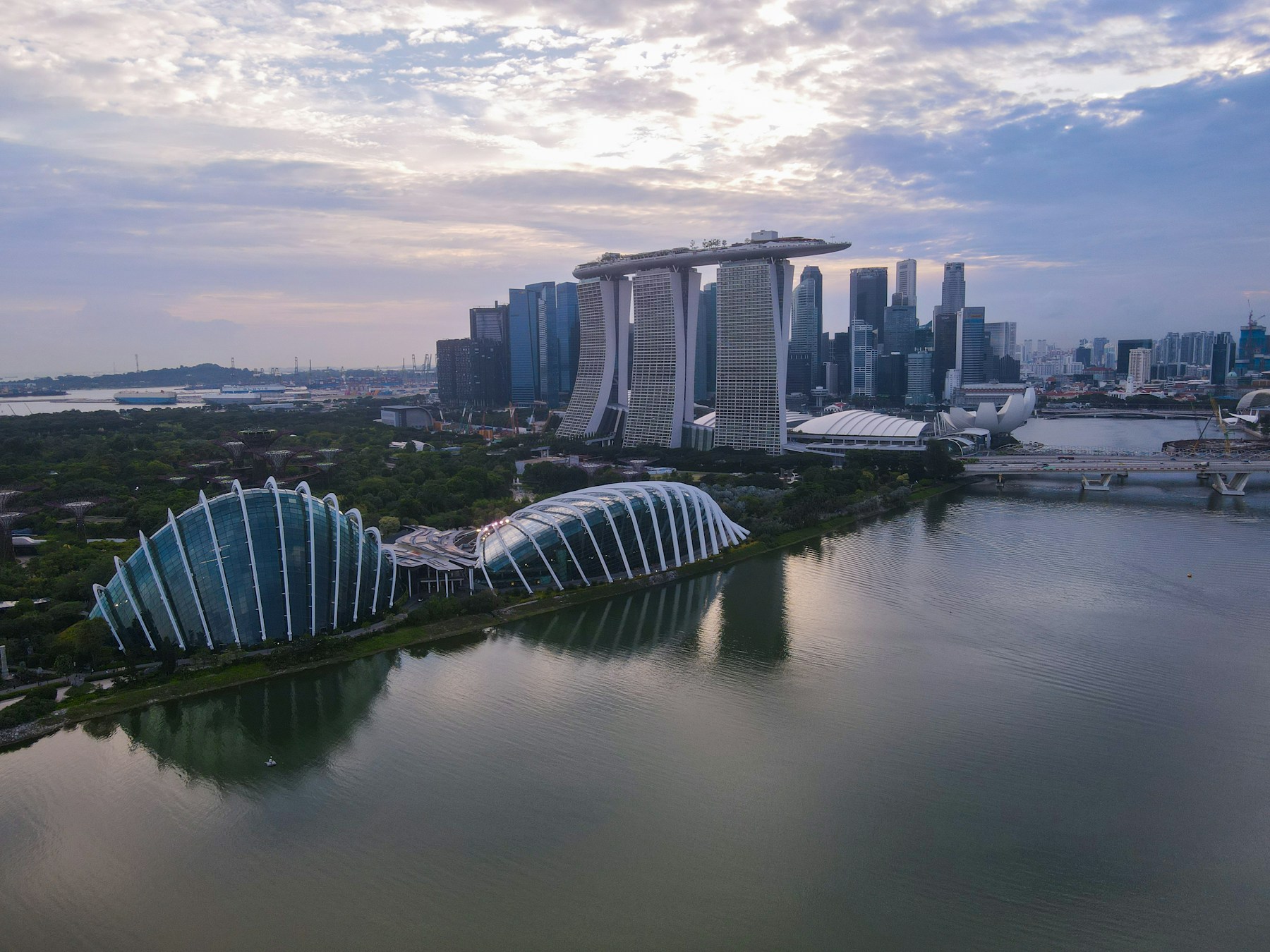
Sea-level rise introduces the longest horizon. Singapore's latest official projections allow for mean sea level rising by up to 1.15 metres by 2100. When high tides and storm surges combine, extreme coastal levels could reach five metres. The immediate response is adaptation: barriers, raised land, drainage, protected coastlines and sustained public investment.
For a wealthy city, these projects are feasible. Their cost still belongs in the price of permanence. Coastal protection competes for capital, changes planning assumptions and becomes relevant to insurers, lenders and owners of long-duration assets. Premium property depends partly on confidence that the surrounding public realm will remain accessible, insurable and desirable across decades.
Singapore may manage this risk better than most exposed cities. Successful adaptation could reinforce its reputation for competence. The larger point remains: environmental quality has moved from urban amenity to balance-sheet issue.
Prestige after the clean-city era
Singapore's environmental position is best understood as a competition between capability and exposure. Its state capacity is unusually strong. Its geography is unusually constrained. Dense development, industrial activity, tropical heat, dependence on regional air and a low-lying coastline meet within a small territory whose global value rests on reliability.
The city's prestige is therefore unlikely to disappear through one dramatic environmental event. It can be eroded at the edges: fewer outdoor hours, higher cooling costs, periodic travel hesitation, weaker hotel pricing, greater adaptation spending and a gradual repricing of comfort.
The cities most vulnerable to this process are often the places with the most to lose. A destination already associated with disorder receives little additional penalty when conditions deteriorate. A premium jurisdiction is judged against the standard it created. Singapore's environmental challenge is to preserve the invisible ease that made the city valuable in the first place.
History suggests that urban status is more resilient than urban comfort, which is precisely why the early losses are easy to dismiss. Angkor's hydraulic strain, the smoke burden of industrial Britain and the talent problem created by modern smog differ in scale and period. Each shows ecology working through the practical systems of a city: water, housing, labour, health and mobility. Singapore possesses greater administrative capacity than most precedents. Its test is whether that capacity can continue to outrun exposures originating beyond the reach of the island itself.
---
Sources and further reading
- CNA, 15 September 2026: regional PSI readings at 06:00 and 13:00 Singapore time
- Meteorological Service Singapore: Haze Situation Update, 14 September 2026
- NEA: live haze readings and activity guidance
- UBS Global Wealth Report 2026: wealth per adult (p. 14), millionaire estimates (p. 22), methodology (pp. 37–38)
- GIC and S&P Global Sustainable1, 2024: Integrating Climate Adaptation into Physical Risk Models (pp. 9–14)
- Quah, Chia and Tan, 2021: Economic impact of 2015 transboundary haze on Singapore
- NUS research commentary, 2019: hotel-rate estimates during the 2015 haze
- Singapore Ministry of Sustainability and the Environment: Clean Air
- Singapore Statutes Online: Transboundary Haze Pollution Act 2014, sections 4–6 and 9–10
- Ministry of Manpower, 6 May 2026: heat stress and projected productivity losses
- MSE: Year of Climate Adaptation, temperature and coastal projections (updated 21 August 2026)
- PUB: Singapore water quality
- Journal of World Business, 2026: Local air pollution and expatriate deployment
- W. Walker Hanlon: Coal Smoke, City Growth, and the Costs of the Industrial Revolution
- University of Oregon, 2021: the Greater Angkor population reconstruction published in Science Advances
- PNAS, 2019: Temple occupation and the tempo of collapse at Angkor Wat, Cambodia
- Lieberman and Buckley: climate and the transformation of Angkor