Dubai Design Week 2026: What to Watch
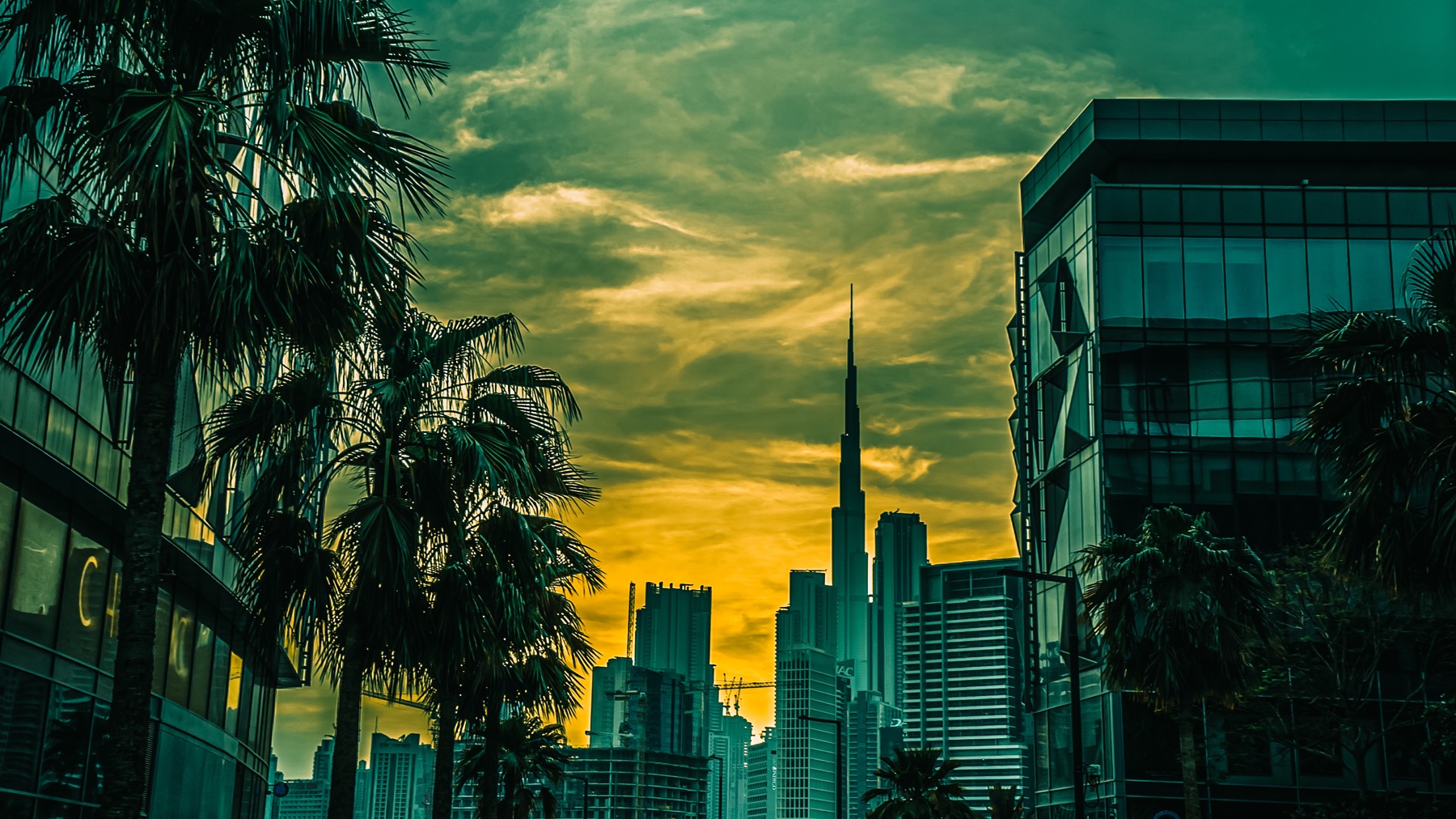
Dubai Design Week returns to Dubai Design District from 3 to 8 November for its twelfth edition. Its scale is useful, but scale is not the most interesting fact. The sharper story is how many projects move away from design as surface and towards design as a system: a way to manage heat, transmit knowledge, recover material and create the conditions for people to meet.
That shift matters beyond a festival calendar. In fast-growing cities, the consequential design questions are often ordinary ones. Where does shade fall? Which materials can be reused? How does a public space invite people to stay rather than merely pass through it? What survives when craft knowledge is translated into a new technology or building type?
Start with atmosphere, not spectacle
The 2026 Urban Commissions winner, Three Gardens and a Room by Dubai-based NAO Architects, is the clearest place to begin. The project arranges distinct garden environments around a shared central space. Foliage, filtered light, colour, shade and thermal comfort are treated as architectural material.
That vocabulary is deceptively modest. In a climate where outdoor comfort is an infrastructure question, shade and temperature are not finishing touches. They determine whether a public realm can support pause, conversation and repeated use. The commission is strongest when read not as a temporary garden, but as a compact argument for sensory performance in urban design.
Material recovery becomes architectural language
Several installations ask what can be built from what has already been damaged, discarded or overlooked. Palestinian-Turkish ae studio uses reclaimed concrete rubble in InBetween What Was and What Will Be. The premise carries an obvious emotional charge, yet its design value lies in refusing to treat rubble as inert waste. It becomes a material with memory and structural possibility.
Elsewhere, Taqleem by Emirati-Jordanian architect Rasha Saffarini draws on palm-tree trimming to form a communal space. The relevant lesson is not that a traditional practice can be made picturesque. It is that local maintenance knowledge can supply a contemporary design method. This is the distinction between borrowing the look of heritage and learning from its operating logic.
Craft is a code
Abwab, Dubai Design Week's commissioning programme, turns this distinction into its central subject. Its 2026 edition, In Other Words, considers communication through material, form, gesture and space. VARUSSI's Taleem begins with the coded notation used in Kashmiri carpet and Kani shawl making, where instructions pass between designer and weaver through an established language.
Translated into architecture, the code becomes inhabitable. That move is important because it resists the familiar reduction of craft to hand-made luxury. Craft here is an information system: repeatable, teachable and capable of carrying complex decisions across generations. Kanaka Raghavan's Cheent Devanagari similarly works with block printing and the structural logic of Devanagari letterforms, challenging the assumption that Latin typography should be the universal starting point.
The exhibition inside the festival
Inherited Futures is the theme of the UAE Designer Exhibition, not the whole festival. That precision improves the reading of the programme. With AlZaina Lootah as 2026 Design Collaborator, the exhibition asks UAE-based designers to interpret inherited materials, rituals, technologies and ways of making through contemporary work.
The phrase can easily collapse into nostalgia. The more demanding interpretation is forward-looking: inheritance creates obligations as well as references. A designer must decide what can be preserved intact, what needs adaptation and what should be questioned. The best work will make those decisions legible rather than simply attaching a historical motif to a new object.
Where commerce meets cultural infrastructure
Downtown Design runs from 4 to 8 November alongside the wider festival. Its international brands and collectible design inevitably bring a more commercial register. Yet the fair is also where regional studios meet buyers, manufacturers, specifiers and hospitality groups. For an emerging practice, that network can determine whether a prototype becomes a durable business.
This is why the festival should be read as more than an event. It connects public commissions, education, retail, international presentation and professional exchange. The weekend Marketplace adds independent makers and small businesses to that ecology. At its most useful, Dubai Design Week is not merely displaying a creative economy; it is helping to assemble one.
Five projects to keep in view
NAO Architects, Three Gardens and a Room, for its treatment of shade, thermal comfort and gathering as one architectural problem.
ae studio, InBetween What Was and What Will Be, for turning reclaimed concrete rubble into a material argument about continuity.
VARUSSI, Taleem, for presenting textile notation as transferable spatial knowledge.
Kanaka Raghavan, Cheent Devanagari, for grounding typography in the material intelligence of block printing.
Nikken Sekkei with SOBOKUYA, CHATAI 2.0, for combining Japanese timber craftsmanship with a structure designed for communal making.
Dubai Design Week is free to attend and runs at Dubai Design District from 3 to 8 November 2026. Downtown Design runs from 4 to 8 November. Programme details and opening hours are available from the official festival site.